



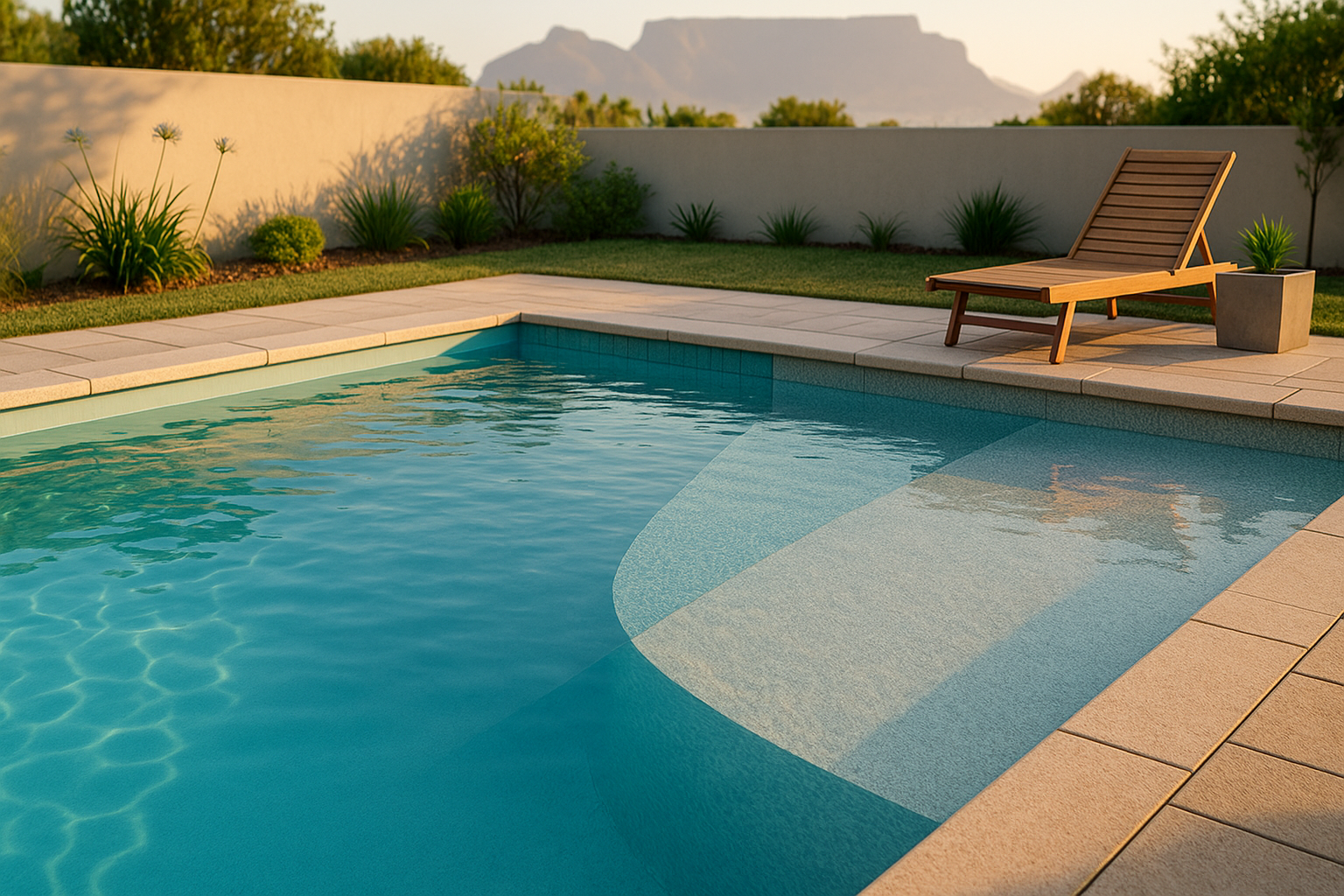
So, you’ve decided to make the ultimate summer investment — a swimming pool in Cape Town. That’s an excellent choice, considering how our long summers and warm afternoons make the pool the perfect centrepiece for relaxation and family time.
But before you start designing your dream pool, there’s a key decision to make: should you go for fibreglass or marbelite?
It’s a question Cape Town homeowners ask all the time, and the answer isn’t always simple. Each material has its own benefits and drawbacks — from how it handles our coastal climate and ground conditions to how much maintenance you’re willing to do.
Let’s break down the differences so you can make an informed decision that suits your lifestyle, property, and budget.
Marbelite Pools: Classic Craftsmanship and Lasting Beauty in Cape Town
Marbelite pools are built using a blend of coloured marble plaster and cement. They’re known for their classic, timeless finish and are especially popular among homeowners who want something elegant and completely customisable.
Because marbelite is porous, however, it tends to absorb more dirt and algae over time — which means marbelite pools require more frequent cleaning and careful chemical maintenance. If you don’t mind regular cleaning and maintenance, marbelite can serve you beautifully for many years.
When built correctly and cared for properly, a marbelite pool can last around 15 years before needing resurfacing or re-marbeliting. Many pool owners in Cape Town opt for marbelite because it offers design freedom — you can shape, colour, and tile it exactly the way you want.
Pros and Cons of Marbelite Pools
| Pros | Cons |
|---|---|
| Fully customisable in shape and design | Surfaces can become rough over time |
| Non-slippery surface | Porous surface allows algae buildup more easily |
| Can include ceramic mosaics for added visual appeal | Poor chemical balance may lead to discolouration |
| Offers a wide range of colour finishes | – |
💡 Expert insight:
In areas like Durbanville, Somerset West, or Constantia — where ground movement and high mineral content can be factors — a properly sealed marbelite finish combined with a balanced chemical routine can still provide excellent longevity.
Fibreglass Pools: Modern, Low-Maintenance Luxury for Cape Town Homes
Fibreglass pools are a more modern option. They’re constructed with a durable, pre-formed shell coated with a fibreglass gel layer, which gives the pool its smooth, sleek surface. Unlike marbelite, fibreglass is non-porous, so algae and dirt can’t easily cling to it — making cleaning and maintenance a breeze.
This is one of the main reasons fibreglass pools are becoming so popular in Cape Town. With the city’s water restrictions and a focus on low-maintenance homes, fibreglass offers a convenient and efficient way to own a pool without the constant scrubbing and chemical balancing.
When installed correctly, fibreglass pools can last up to 30 years, with a top-coat replacement only required every 20 years or so.
Pros and Cons of Fibreglass Pools
| Pros | Cons |
|---|---|
| Requires fewer pool chemicals | Surface can be slippery |
| Non-porous and resistant to algae | Naturally has a higher acidity level |
| Easier to maintain and clean | Poor installation can lead to delamination |
| Ready to use within 72 hours after installation | – |
💡 Expert insight:
Fibreglass performs especially well in Cape Town’s windy, sandy coastal areas such as Table View, Milnerton, and Blouberg. The material flexes slightly with ground movement and resists salt corrosion — perfect for homes near the ocean.
How to Tell if Your Pool is Fibreglass or Marbelite
Not sure which type of pool you already have? It’s actually quite easy to tell once you know what to look for. Identifying your surface is important because fibreglass and marbelite pools need slightly different chemical care.
1. Feel the Surface
Run your hand along the inside wall of the pool.
- If it feels rough or grainy, a bit like plaster or sandpaper, it’s marbelite.
- If it feels smooth and glossy, almost like a bathtub, it’s fibreglass.
2. Look at the Mosaics
Check the tiles near the waterline.
- Marbelite pools use ceramic tiles that you can feel sticking out slightly.
- Fibreglass pools have flat, printed mosaics — you can’t feel their edges because they’re part of the surface coating.
3. Check Your Pool’s Water Balance
Even the recommended chemical levels are slightly different:
- Fibreglass: Total Alkalinity around 120–150 ppm
- Marbelite: Total Alkalinity around 80–120 ppm
Keeping these levels in range helps prevent stains, rough patches, or surface damage — especially with Cape Town’s naturally hard water.
Which One Is Better for You?
That depends on what you value most.
If you want a low-maintenance pool that’s quick to install and easy to clean, fibreglass is an excellent choice. It’s perfect for busy families who prefer enjoying the water instead of worrying about maintenance.
If, however, you love the idea of a bespoke pool design that matches your home’s architecture, or if you’re after a textured, natural look, marbelite gives you that creative flexibility.
Many Cape Town homeowners also choose hybrid upgrades — resurfacing old marbelite pools with a fibreglass lining to combine the best of both worlds: a strong structure with a smooth, low-maintenance finish.

Need Expert Advice or Pool Renovation Help?
Whether you’re planning a new pool installation or trying to identify what kind of surface your current pool has, Cape Pools is here to help.
We’ve been working with fibreglass and marbelite pools in Cape Town for years, offering expert services like pool resurfacing, fibreglass relining, custom pool construction, and repairs across all suburbs — from the Atlantic Seaboard to the Southern Suburbs and beyond.

Contact us today for expert advice, honest recommendations, and a free quotation tailored to your home, lifestyle, and budget. Let’s build or restore your dream pool — one that’s perfect for Cape Town living.


Comments are closed