



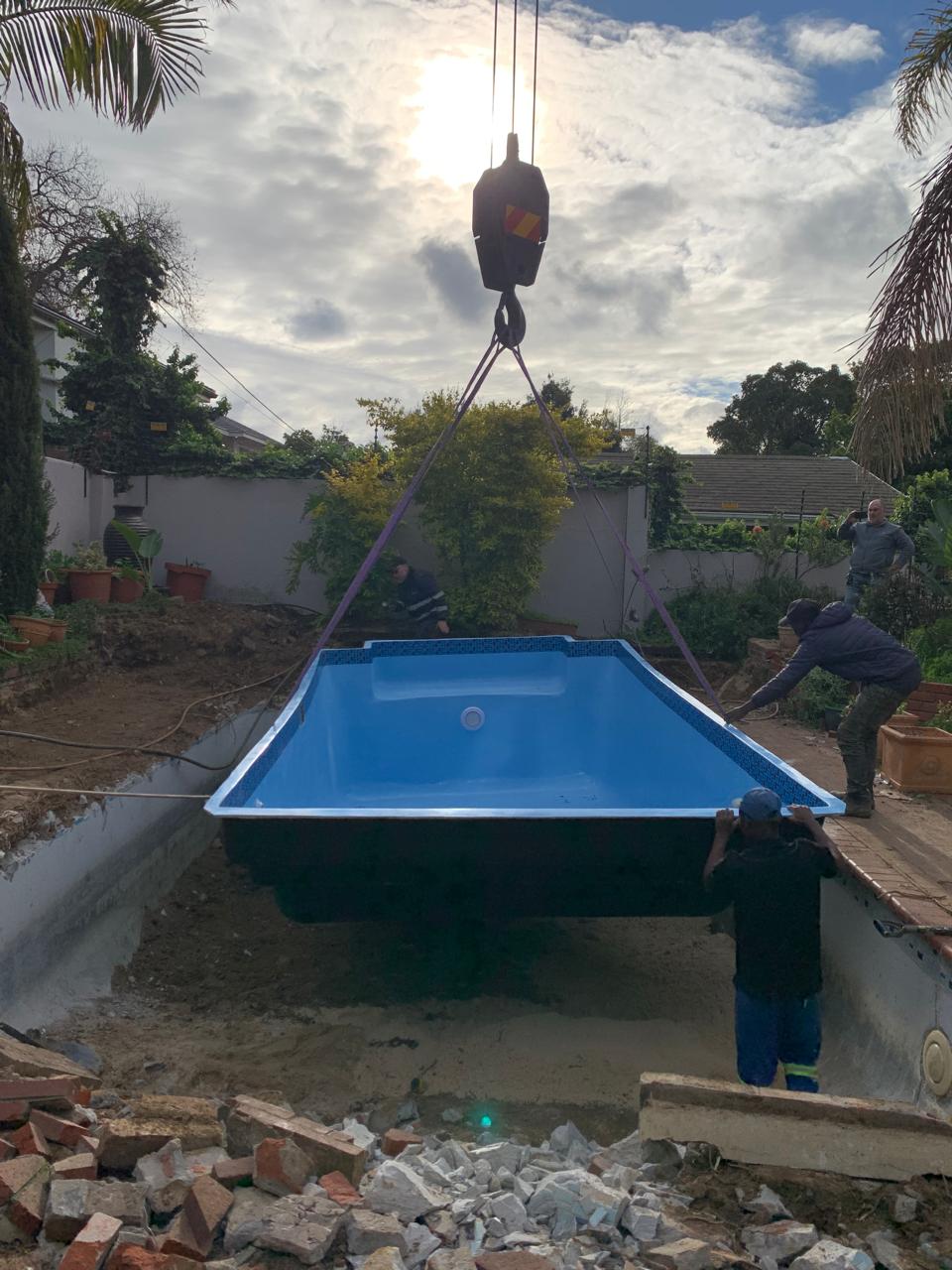
A new swimming pool is one of those home improvements that people picture long before the first sod of soil is turned. You imagine where the pool will sit, how it will transform your garden, and the weekends you’ll spend enjoying it with family and friends. What most homeowners don’t picture is a crane lifting an entire fibreglass pool high into the air before gently lowering it into position.
It might look like an extraordinary operation, but crane-assisted fibreglass pool installations are far more common than many people realise. In fact, for some properties, they are simply the safest, quickest, and most practical way to install a pool.
Modern homes are often built with high boundary walls, narrow side passages, mature landscaping, or neighbouring buildings that make traditional access impossible. Rather than trying to manoeuvre a large fibreglass pool shell through spaces it simply cannot fit, experienced installers use a crane to lift the shell over obstacles and place it directly into the prepared excavation.
While the actual lift may only take a short time, a successful crane-assisted installation depends on careful planning long before the crane arrives. Everything from your property’s layout and soil conditions to overhead power lines and weather forecasts can influence how the installation is carried out.
Understanding what happens behind the scenes not only gives you confidence in the process but also helps you appreciate why experienced planning is every bit as important as the installation itself.
Planning a Pool Installation?
Whether you’re still exploring your options or you’re ready to install, the Cape Pools team can assess your property and advise whether a crane-assisted installation is the right solution.
Why Some Fibreglass Pools Need a Crane
One of the biggest misconceptions homeowners have is that a crane is only required for unusually difficult properties. In reality, access challenges are far more common than people expect.
Unlike concrete pools, which are constructed inside the excavation, fibreglass pools arrive as a complete one-piece shell. This is one of the reasons fibreglass pools are so popular. Manufacturing takes place in a controlled environment, resulting in consistent quality, smooth finishes, and significantly shorter installation times.
The trade-off is that the completed shell must somehow make its way from the delivery truck into your garden.
On some properties, this is relatively straightforward. The installation team can move the shell through an open access point before lowering it into the excavation. On many modern homes, however, this simply isn’t possible.
Perhaps your house occupies most of the stand, leaving only a narrow walkway along one side. Maybe your property is surrounded by tall walls that provide excellent privacy but prevent equipment from entering. It could even be a beautiful mature garden with established trees that you understandably don’t want removed.
Instead of trying to work around these obstacles, a crane allows the pool to travel over them.
From above, the installation becomes remarkably efficient. The crane lifts the shell directly from the transport vehicle and positions it precisely where it needs to be, reducing unnecessary handling and often making the installation quicker than alternative methods.
Every Property Is Different
One of the reasons experienced installers insist on carrying out a site inspection is because no two installations are ever exactly alike.
Two homes in the same neighbourhood may appear similar from the street while presenting completely different installation challenges once access is assessed.
A professional site inspection isn’t simply about deciding whether a crane is needed. It is about understanding every factor that could influence the installation so that there are no costly surprises on the day.
During the assessment, installers typically evaluate:
- The available access from the street.
- The position of boundary walls and neighbouring structures.
- The distance between the delivery vehicle and the excavation.
- The dimensions of the selected fibreglass pool.
- The amount of working space available for the crane.
- Ground conditions where the crane will be positioned.
- Potential overhead obstructions, including trees and power lines.
These details help determine not only whether a crane is required, but also the type of crane needed, where it should be positioned, and the safest lifting path for the pool shell.
Planning these logistics in advance keeps installation day running smoothly and significantly reduces the likelihood of delays.
Access Challenges Are Often Less Obvious Than They Seem
Many homeowners assume their property has good access because they have a wide driveway or a spacious front garden. Unfortunately, access for a fibreglass pool installation involves far more than the route a vehicle takes to your home.
For example, imagine a property with a double garage and a generous driveway. On the surface, access appears excellent. However, if the back garden is completely enclosed by boundary walls with no side access, the fibreglass shell still cannot physically reach the excavation.
Likewise, a home may have plenty of open space at the rear, but large indigenous trees or neighbouring buildings could restrict the crane’s lifting angle.
Even something as simple as the position of a swimming pool pump room, entertainment area, or recently completed patio can influence how the installation is approached.
Experienced installers are trained to identify these challenges before they become problems. Rather than improvising on installation day, they develop a lifting plan that works within the property’s existing layout while protecting surrounding structures.
Why the Crane Isn’t the Most Important Part of the Process
It might sound surprising, but the crane itself is only one piece of the puzzle.
The real success of a crane-assisted installation comes from the preparation that happens beforehand.
By the time the crane arrives, every stage leading up to the lift should already have been completed. The excavation should be finished, levels confirmed, measurements checked, and the installation team should already know exactly where the pool will be positioned.
In many ways, the crane operator is executing a carefully prepared plan rather than making decisions on the spot.
This level of preparation allows the lift to happen efficiently, with clear communication between the crane operator and the installation team throughout the process.
For homeowners, this often comes as a surprise. What appears to be a dramatic lift lasting only a few minutes is actually the result of days, and sometimes weeks, of careful planning.
The Excavation Has to Be Ready Before Installation Day
One of the easiest ways to delay a crane-assisted installation is having an excavation that isn’t fully prepared.
Because cranes are hired equipment, every hour on site matters. If the excavation still requires reshaping, levelling, or additional excavation after the crane arrives, valuable time is lost.
More importantly, an incomplete excavation increases the chances of unnecessary adjustments once the pool is already suspended.
Professional installers work hard to avoid this situation.
Before the delivery vehicle even leaves for your property, they ensure the excavation has been completed according to the manufacturer’s specifications.
This includes confirming the correct dimensions, verifying the base levels, ensuring suitable drainage where required, and checking that the excavation is ready to receive the fibreglass shell immediately after the lift.
The goal is simple. Once the crane lowers the pool into place, there should be very little need for major adjustments.
That level of preparation not only saves time but also contributes to the long-term performance of the pool.
Weather Can Influence More Than You Might Think
When homeowners think about weather delays, rain is usually the first thing that comes to mind. While heavy rain can certainly affect installation schedules, it is often the wind that becomes the deciding factor during a crane-assisted lift.
A fibreglass pool shell may appear extremely heavy, but once it is suspended from a crane, it also presents a large surface area that can be affected by strong gusts.
For this reason, experienced installation teams monitor weather forecasts carefully before confirming installation dates.
Safety always takes priority over keeping to a schedule.
In some situations, postponing the lift by a day is far preferable to attempting an installation in unsuitable conditions.
Although this may feel frustrating for eager homeowners, it reflects professional planning rather than inconvenience. The objective is always to complete the installation safely without placing unnecessary stress on the equipment, the pool shell, nearby structures, or the people involved.
Understanding the Space a Crane Actually Needs
One of the most overlooked aspects of a crane-assisted installation is the amount of space the crane itself requires. While homeowners tend to focus on whether the pool can reach the excavation, installers must also consider whether the crane can operate safely from the chosen location.
A crane is much more than the boom that extends into the air. Before any lifting takes place, it must be stabilised using outriggers, which are hydraulic supports that extend from either side of the vehicle to distribute its weight evenly. Depending on the size of the crane being used, these outriggers can require a surprisingly large footprint.
The ground beneath the crane also needs to be capable of supporting significant weight. If the crane is positioned on unstable, saturated, or recently disturbed soil, additional planning may be required to ensure safe operation. In some cases, timber mats or steel plates are used to spread the load and improve stability.
Road access is another important consideration. Residential estates, narrow streets, cul-de-sacs, and properties situated on steep hillsides can all influence where the crane can be positioned. Sometimes the ideal lifting position is directly outside the property, while other installations may require the crane to be set up further away with a longer lifting reach.
This is one of the reasons experienced installers never assume that one crane is suitable for every project. The right crane is selected based on the property’s unique requirements rather than simply choosing the largest machine available.
Protecting Your Home and Landscape
By the time a homeowner decides to install a swimming pool, significant investment has often already gone into the property. Landscaped gardens, paving, retaining walls, irrigation systems, patios, and entertainment areas all deserve to be protected throughout the installation process.
Fortunately, one of the unexpected advantages of a crane-assisted installation is that it often causes less disruption than people imagine.
Because the pool is lifted directly into position, there is no need to drag or manoeuvre the shell through narrow spaces that could damage lawns or garden beds. Instead, the lifting path is carefully planned so that the shell travels over obstacles rather than through them.
Professional installation teams also identify vulnerable areas before work begins. Decorative paving, irrigation pipes, outdoor lighting, and newly planted gardens are all considered when planning vehicle access and equipment placement.
If temporary protection is needed, it is arranged before installation starts rather than reacting to problems afterwards.
For homeowners, this planning provides peace of mind. The focus is not only on installing the pool successfully but also on leaving the rest of the property in excellent condition.
Not Sure if Your Property Needs a Crane?
A professional site inspection can quickly determine the safest and most practical installation method for your home. Speak to Cape Pools for expert advice before your project begins.
Why Good Communication Makes Installation Day Easier
While much of the planning happens behind the scenes, homeowners also play an important role in ensuring installation day runs smoothly.
Before the scheduled installation, your installer will usually explain what to expect, including arrival times, site access requirements, and any preparations that should be completed in advance.
Simple steps can make a noticeable difference. Moving vehicles away from the working area, ensuring access gates can be opened fully, securing pets indoors, and informing neighbours about temporary activity outside the property all help minimise interruptions on the day.
For homes within security estates or gated communities, additional arrangements may also be necessary. Delivery vehicles and cranes often require advance authorisation, and estate management may need to approve access or reserve space outside the property.
These details may seem minor, but when handled in advance, they help the installation proceed efficiently without unnecessary delays.
The Cost of a Crane-Assisted Installation
Homeowners are naturally interested in understanding how a crane affects the overall cost of a fibreglass pool installation. While every project is different, it is important to view crane hire in the context of the entire installation rather than as an isolated expense.
Several factors influence the final cost, including the size of the pool, the type of crane required, the lifting distance, the complexity of the site, and the amount of time the crane will be needed. Properties with straightforward access generally require less planning than those where the crane must lift over multiple obstacles or work within confined spaces.
Although a crane adds to the installation budget, it often represents the safest and most efficient solution. Attempting to avoid crane hire on a property with restricted access can introduce unnecessary risks, increase labour requirements, and potentially lead to costly damage to the pool shell or surrounding property.
Professional installers will always recommend the installation method that delivers the safest outcome rather than simply the cheapest one.
Common Misconceptions About Crane Installations
Because most people have never seen a swimming pool installed by crane, several myths continue to circulate.
One of the biggest misconceptions is that using a crane means something has gone wrong. In reality, many installations are planned as crane lifts from the very beginning because they are the most practical option.
Another common belief is that cranes are only used on luxury homes or unusually large properties. The truth is that even modest suburban homes sometimes require a crane because of narrow access or surrounding structures.
Some homeowners also assume that the lift itself is the most dangerous part of the project. In reality, professional crane operations follow strict safety procedures and are carried out by trained operators working closely with experienced pool installers. The planning that takes place before installation day significantly reduces risk and ensures everyone involved understands their role.
Finally, there is the perception that a crane-assisted installation will take much longer than a standard installation. Ironically, the opposite is often true. Once everything has been properly prepared, the actual lift can be completed surprisingly quickly, allowing the installation team to move on to the next stages of the project.
Choosing an Installer Matters More Than Choosing a Pool
Homeowners understandably spend considerable time selecting the right pool size, shape, and finish. However, the quality of the installation has just as much influence on the long-term enjoyment of the pool.
A beautifully manufactured fibreglass pool can only perform as intended if it is installed correctly.
Experienced installers understand far more than excavation depths and plumbing connections. They know how to assess difficult sites, coordinate deliveries, communicate with crane operators, monitor weather conditions, and adapt to unexpected challenges without compromising quality or safety.
Perhaps more importantly, experienced companies recognise potential issues before they become expensive problems.
For example, they may identify restricted access during the quotation stage, recommend minor adjustments to landscaping before installation, or suggest a different crane position that simplifies the entire operation.
This level of foresight comes from years of practical experience and can make the difference between a stressful project and a smooth installation.
A Crane Lift Is Only One Day. Your Pool Is for Many Years.
It’s easy to focus on the excitement of watching a crane lower a fibreglass pool into place. For many homeowners, it becomes one of the most memorable moments of the entire project.
Yet that brief lift represents only a small part of the bigger picture.
What truly determines the success of your investment is the planning, preparation, and expertise behind the scenes. Every site inspection, every measurement, every safety check, and every logistical decision contributes to an installation that will continue to perform well for years to come.
A crane-assisted installation should never be viewed as a complication. Instead, it is simply another professional solution that allows homeowners with challenging access to enjoy the same high-quality fibreglass swimming pool as anyone else.
When the project is planned carefully and carried out by experienced professionals, the process is remarkably smooth. What begins with a carefully coordinated lift ends with something far more rewarding: a beautifully installed swimming pool that becomes the centrepiece of your outdoor space for many years to come.
Ready to Bring Your Dream Pool Home?
Whether your property has wide-open access or presents unique installation challenges, Cape Pools has the experience to recommend the safest and most effective solution. Contact our team today to arrange a site assessment or request a personalised quotation for your fibreglass pool installation.

Comments are closed