



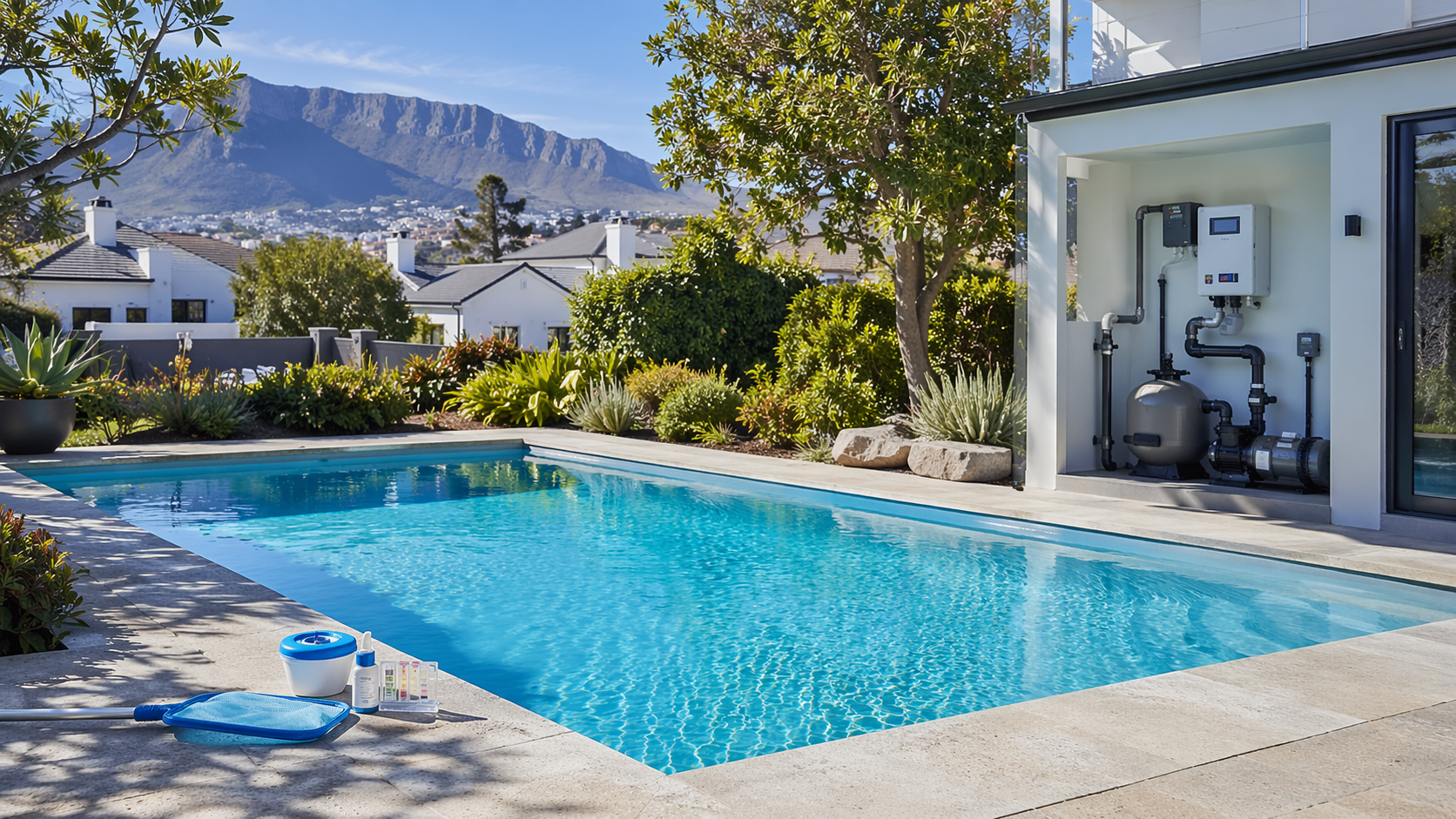
Choosing between a salt water system and a traditional chlorine setup for your fibreglass pool can feel more confusing than it should.
A lot of homeowners assume they are choosing between two completely different types of pools, when in reality both systems still rely on chlorine to keep the water clean and safe.
The real difference is how that chlorine is added and managed over time.
For most fibreglass pool owners in Cape Town, a salt water system is usually the better long-term choice. It tends to be easier to live with, more comfortable to swim in, and better suited to the low-maintenance appeal that makes fibreglass pools so popular in the first place.
That said, traditional chlorine still has its place, especially if upfront budget is your main concern or you prefer a simpler setup with less equipment.
Need Help Choosing the Right Fibreglass Pool Setup?
Speak to us about fibreglass pool installation, salt chlorinators, filtration, and the best long-term pool setup for your home in Cape Town.
What Is the Difference Between Salt Water and Chlorine?
One of the biggest misunderstandings is thinking that a salt water pool has no chlorine in it. That is not really the case.
A salt water pool still uses chlorine. The difference is that the pool has a salt chlorinator that converts dissolved salt into chlorine automatically.
In a traditional chlorine pool, chlorine is added manually using liquid chlorine, tablets, granules, or other sanitising products.
So when people compare salt water and chlorine, they are really comparing two ways of managing chlorine. One is more automated, while the other depends more on regular manual dosing and closer day-to-day attention.
Why Fibreglass Pools Often Work So Well with Salt Water
Fibreglass pools and salt systems usually make a very good match.
Fibreglass has a smooth, non-porous surface, which means it is naturally less likely to encourage algae growth than rougher pool finishes. That makes the pool easier to keep balanced and easier to maintain overall.
A salt water system fits nicely into that kind of setup because it helps produce chlorine more consistently. Instead of getting sharp highs and lows from manual dosing, the pool receives a steadier supply of sanitiser.
For many homeowners, that means fewer sudden chemistry swings and a more predictable maintenance routine.
This does not mean a fibreglass pool cannot run perfectly well on traditional chlorine. It absolutely can.
It just means that when people choose fibreglass partly because they want a cleaner, easier, more user-friendly pool, salt water often supports that goal better.
Why Many Homeowners Prefer Salt Water
The biggest reason many people lean toward salt water is convenience. Once the chlorinator is installed and set up properly, the system helps generate chlorine automatically as the water circulates.
You still need to test the water and keep the chemistry balanced, but the pool does not rely as heavily on you remembering to manually add chlorine all the time.
Another reason is comfort. Salt water pools are often described as feeling softer and gentler on the skin and eyes.
Many homeowners also like that the water does not have the same strong chemical feel people sometimes associate with heavily dosed chlorine pools.
In a place like Cape Town, where pools are often a big part of family life during the warmer months, that softer and more comfortable swimming experience can be a genuine plus.
If the pool is being used regularly by children, guests, or the whole household over summer, the difference can become quite noticeable.
Need Help Choosing the Right Fibreglass Pool Setup?
Speak to us about fibreglass pool installation, salt chlorinators, filtration, and the best long-term pool setup for your home in Cape Town.
The Downsides of Salt Water
Salt water is often the better option, but it is not perfect.
The main drawback is the higher upfront cost. A salt chlorinator and cell add to the initial equipment bill, so getting started is more expensive than a standard chlorine setup.
Over time, many homeowners feel the convenience makes it worth it, but the initial outlay is still something to factor in.
Salt systems also need proper chemical management. Some people make the mistake of thinking a salt pool looks after itself. It does not.
You still need to test the water regularly, keep the pH in range, and make sure the chlorinator is working correctly. In fact, salt systems often push pH upward over time, which means pH control becomes especially important.
There is also the issue of corrosion. Salt water is gentler on swimmers, but it can be harder on certain metal components, nearby fixtures, and some surrounding materials if the pool system is poorly installed or badly maintained.
That does not mean salt water is a bad option. It just means it should be done properly and managed responsibly.
Why Some Homeowners Still Choose Traditional Chlorine
Traditional chlorine still makes sense for many pool owners, especially when installation budget is tight or when people want to avoid the cost of a salt chlorinator.
The biggest advantage is the lower upfront cost. A standard chlorine pool setup is simpler and cheaper to install.
For some homeowners, especially if they are more hands-on with pool care, that is enough reason to stay with a manual chlorine system.
It also gives you direct control. Some pool owners prefer testing the water themselves and adjusting chlorine levels manually rather than relying on a chlorinator cell and controller.
If you are consistent and disciplined, a chlorine-treated fibreglass pool can stay just as clear, safe, and enjoyable.
The challenge is that manual chlorine systems often require more attention. If you forget to dose properly, if the weather changes suddenly, or if the pool gets heavy use, chlorine levels can drop quickly.
That can lead to cloudy water, algae issues, or chemistry that feels like it is always chasing balance.
What Works Best in Cape Town Conditions?
Cape Town conditions make consistency especially important. Strong sun, wind, warmer days, pool parties, and seasonal use can all affect chlorine demand. That is one reason salt water often works well here.
It helps the pool produce chlorine steadily in the background instead of relying entirely on manual intervention.
Cape Town homeowners also tend to value low-maintenance outdoor living. If you are investing in a fibreglass pool for comfort, appearance, and ease of ownership, a salt water system usually fits that lifestyle better.
It helps reduce the constant feeling that you need to monitor and add chemicals every second day during peak swimming season.
That said, traditional chlorine can still work very well in Cape Town if you are prepared to stay on top of your water testing and chemical routine. It is not that chlorine is unsuitable. It just asks more from the owner.
Need Help Choosing the Right Fibreglass Pool Setup?
Speak to us about fibreglass pool installation, salt chlorinators, filtration, and the best long-term pool setup for your home in Cape Town.
Which Option Is Better for Long-Term Maintenance?
From a long-term lifestyle point of view, salt water usually comes out ahead for fibreglass pools.
That is because the system supports a more stable and convenient maintenance routine. You are still maintaining the pool, but the sanitising side becomes less manual and more consistent.
For many households, that means fewer disruptions, less guesswork, and a pool that feels easier to own.
Traditional chlorine can still be perfectly effective, but it often feels more reactive. You test, adjust, add, retest, and repeat. Some pool owners do not mind that.
Others eventually get tired of it and wish they had gone with a salt chlorinator from the start.
So, What Is Best for Your Fibreglass Pool?
If you want the short answer, salt water is usually the better overall choice for a fibreglass pool in Cape Town.
It suits the smooth, low-maintenance nature of fibreglass, gives a more comfortable swimming feel, and makes it easier to maintain a steady level of sanitiser in the water.
For most homeowners, that combination of comfort and convenience is hard to beat.
Traditional chlorine is still a valid option if you want a lower upfront cost or prefer manual control. It can absolutely work well.
But if your goal is to make pool ownership simpler and more enjoyable over the long run, salt water is usually the stronger fit.
Final Thoughts
Choosing between salt water and chlorine is really about deciding how you want to manage your pool over time. Both systems can keep a fibreglass pool clean and healthy when they are maintained properly.
The difference is that one usually feels easier and more comfortable to live with.
For most fibreglass pool owners in Cape Town, salt water gives the best balance of convenience, swimmer comfort, and long-term practicality.
If the system is installed properly and the water chemistry is kept under control, it is usually the option that makes day-to-day pool ownership feel simpler.
Need Help Choosing the Right Fibreglass Pool Setup?
Speak to us about fibreglass pool installation, salt chlorinators, filtration, and the best long-term pool setup for your home in Cape Town.


Comments are closed