



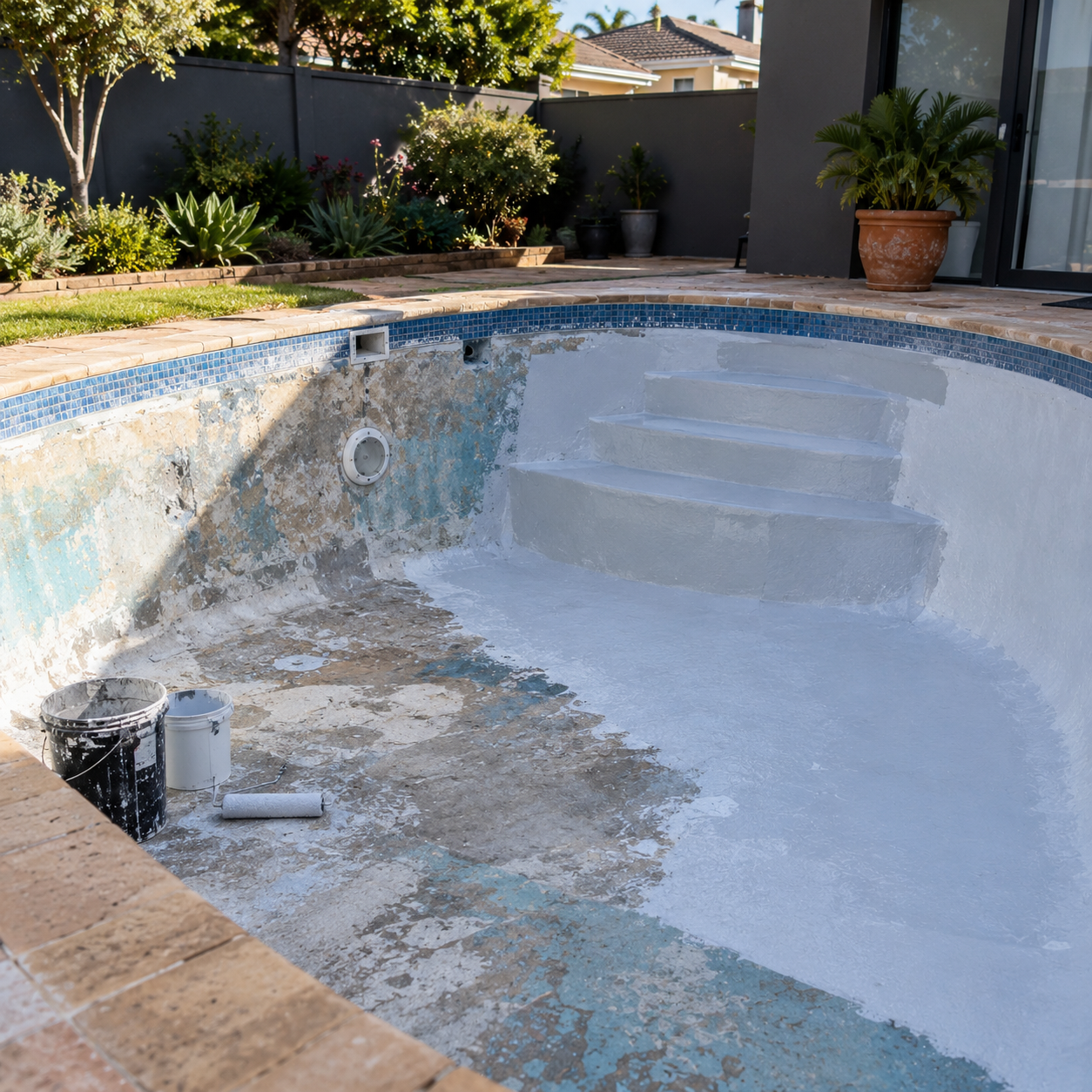
A pool relining project can look like a fairly quick job from the outside. The old surface is prepared, the new fibreglass lining is installed, and the pool is filled again. In practice, the time between draining the pool and being able to swim in it again depends on several things, including the condition of the existing surface, the repairs required, the weather and the time needed for the new lining to cure properly.
For a typical residential pool, allow roughly one to two weeks for fibreglass relining, including curing and refilling. Some projects may move faster, while pools with significant surface damage or difficult site conditions can take longer. The important distinction is that the time spent actively working on the pool is not necessarily the same as the total time the pool remains unavailable.
If you are planning a pool renovation in Cape Town, it helps to know what happens at each stage, which delays are avoidable and when the pool can safely be returned to use.
Planning Your Pool Relining?
Complete the form below to tell us about your pool and arrange an assessment of the work required and the likely project timeline.
How Long Does Pool Relining Usually Take?
For many residential pools, allow approximately one to two weeks from the start of the relining process until the pool is ready to use again. This is a planning estimate rather than a guaranteed completion period. The actual duration can only be established once the pool has been assessed and the condition of the existing surface is understood.
It is also worth separating three different parts of the timeline: the physical preparation and installation work, the curing period, and the final steps before swimming can resume.
The preparation and application stages involve getting the old pool surface ready, dealing with any necessary repairs and installing the new fibreglass lining. These stages depend on the pool’s condition and the complexity of the job. A pool with a reasonably sound underlying structure may require less remedial work than one with extensive cracking, loose material or other damage.
After the lining has been applied, it needs sufficient time to cure. This is not a stage that should be rushed simply to get the pool back into use sooner. The installer must follow the appropriate curing requirements for the materials and conditions involved.
The pool then needs to be refilled and checked before swimming can resume. Refilling can take a considerable amount of time depending on the pool’s size, the available water supply and the filling method. Once the water is in, it may also need to be balanced and the pool equipment checked.
These stages explain why a relining project that appears straightforward can still keep a pool out of action for several days beyond the main installation work.
What Happens During the Pool Relining Process?
The overall timeline makes more sense when you understand what needs to happen before, during and after the new lining is installed. Each stage has a purpose, and delays in one part of the process can affect everything that follows.
1. Assessing the pool and planning the work
Before the work begins, the pool needs to be assessed to determine whether fibreglass relining is suitable and what preparation will be required. The visible surface can reveal signs of deterioration, but the full extent of the work may not become clear until the pool is drained and the existing finish can be examined more closely.
The assessment should consider the pool’s current surface, visible cracks, areas where the finish is deteriorating, and any other issues that may affect the new lining. Access to the property and the space available for equipment and materials can also influence how the work is organised.
This initial stage is important because it helps establish a realistic schedule. If the pool needs additional repairs, the work may take longer than it would for a surface in better condition.
It is better to identify these possibilities early than to plan around an unrealistically short installation period.
2. Draining the pool
The pool must be emptied as required for the relining work to proceed. This may sound like a simple step, but it needs to be handled carefully.
The time required depends on the pool’s volume, the method used to remove the water and the arrangements available at the property. Water management also deserves consideration. Where practical, water storage bladders may allow some of the existing pool water to be retained for reuse, depending on its condition and the space available.
Draining should not be treated as an entirely separate household task that can always be done in advance without professional guidance. Groundwater conditions, the pool’s construction and the surrounding ground can affect the risks associated with an empty pool. The appropriate approach should be determined for the specific site.
Once the pool is empty, the existing surface can be examined more thoroughly and prepared for the next stage.
3. Preparing the existing surface
Surface preparation is one of the stages that can have a significant effect on the quality and duration of the project.
The old finish must be prepared so that the new fibreglass system can be installed correctly. Depending on the pool’s condition, this can involve grinding the surface, removing unsuitable material and preparing areas that need repair.
The amount of preparation varies. A pool with widespread deterioration, loose material or several damaged areas may require more work than one with fewer defects. Corners, steps, fittings and changes in the pool’s shape can also require careful attention.
Preparation is not simply about making the surface look neat. The condition of the underlying surface and the quality of the preparation can affect how well the new lining performs. Moving on before the necessary work has been completed can create problems that are more difficult to address once the fibreglass has been applied.
This is one reason two pools of similar size can have different project timelines.
4. Repairing cracks and damaged areas
Once the surface has been exposed and prepared, the team can address defects that need attention before the new lining is installed.
The extent of these repairs depends on what is found. Minor areas of damage may require relatively limited work, while more extensive cracking or weak sections can take longer to investigate and repair. If the damage points to a deeper structural concern, the appropriate solution may also require additional assessment.
It is important to distinguish between repairing the surface and addressing the underlying cause of a problem. Covering visible damage without dealing with an issue that affects the pool’s structure may not provide a suitable long-term result.
Repairs can therefore affect both the schedule and the scope of the project. The timeline may need to be adjusted if more deterioration becomes visible after the old finish is removed.
5. Applying the fibreglass lining
With the surface prepared and the necessary repairs completed, the fibreglass lining can be applied. The system involves installing fibreglass layers and applying a gelcoat finish.
This stage requires suitable working conditions and careful application. The pool’s shape, steps, corners and fittings all need attention, so the work is not necessarily identical from one pool to another.
The condition of the prepared surface, the complexity of the pool and the environmental conditions can influence how efficiently the application proceeds. A straightforward pool may require less time than one with an unusual shape or areas that need extra attention.
Although the application stage is often the most visible part of the renovation, it is only one component of the full timeline. Completing the installation does not automatically mean the pool is ready to be filled or used.
6. Allowing the new lining to cure
Curing is a crucial part of the process because the newly applied materials need to reach the appropriate condition before the next steps can take place.
The time required depends on the materials used, the manufacturer’s requirements and the conditions during installation. Temperature, humidity, airflow and other environmental factors may influence curing, depending on the products and system involved.
This is particularly relevant in Cape Town, where conditions can vary considerably throughout the year. A warm, dry day and a period of damp, cool weather do not necessarily provide the same working conditions.
The installer should determine when the lining is ready for the next stage. Filling the pool too early or allowing the schedule to dictate the curing period can compromise the work.
A sensible programme makes room for the required curing time instead of treating it as an inconvenience to be shortened.
7. Refilling and checking the pool
After the lining has cured sufficiently and the installer confirms that filling can begin, the pool is refilled.
The time this takes depends largely on the pool’s capacity and the available water supply. A larger pool naturally requires more water than a smaller one, and the filling method can affect how quickly the work is completed.
Once the pool is filled, the water needs to be brought into the appropriate chemical balance. The circulation system and relevant equipment should also be checked as part of preparing the pool for use.
This final stage should not be overlooked when estimating the completion date. Even if the relining work itself has finished, the pool is not ready for swimming until the required checks and water treatment have been completed.
The installer should confirm when the pool can be used again and explain any initial care requirements.
What Can Make Pool Relining Take Longer?
The one-to-two-week estimate is useful for planning, but the condition and layout of the pool matter more than the calendar alone. Several factors can extend the time between starting the renovation and reopening the pool.
The condition of the old pool surface
The existing finish is one of the biggest variables. A pool that needs limited preparation is generally more straightforward than one with extensive deterioration, hollow or loose sections, or multiple damaged areas.
Some problems are difficult to assess fully while the pool is still filled. Once the water has been removed and the surface is exposed, the team may discover defects that were not obvious during the initial inspection. The additional work may be necessary to prepare the pool properly for the new lining.
This does not mean every old pool will require extensive repairs. It means the estimate should allow for the possibility that the work needed becomes clearer as the project progresses.
The size and shape of the pool
Pool size affects more than the quantity of materials required. A larger pool has a greater surface area to prepare and line, and it will usually need more water to refill.
The shape also matters. A simple rectangular pool may be more straightforward to work on than a pool with multiple steps, curved walls, built-in seating or other detailed features. These areas require careful preparation and application, which can add time to the work.
For this reason, the age or volume of a pool alone is not enough to determine how long relining will take. Two pools with similar dimensions can still have different timelines because of their construction and condition.
Cape Town’s weather conditions
Weather can influence both the practical working conditions and the time needed for materials to cure. Fibreglass relining requires suitable conditions for the materials being used, so the work cannot always proceed at the same pace regardless of the forecast.
Cape Town’s weather can change between warm, dry periods and cooler, damp conditions. Rain can interrupt outdoor work or affect when certain stages can proceed. Wind may create additional challenges for site work and keeping the working area suitable.
Summer does not automatically mean every project will finish quickly, and winter does not automatically mean relining is impossible. What matters is whether the conditions are appropriate for the specific materials and stage of work.
If weather affects the schedule, it is better to allow the necessary time than to rush an application or curing stage. A realistic completion date should take the forecast and the requirements of the relining system into account.
Unexpected repairs
Additional repairs are another reason the original timeline may change. Cracks, deteriorated areas or other defects may become more apparent once the existing finish has been removed or prepared.
The right response depends on the type and extent of the problem. Some repairs may be manageable within the planned schedule, while others may require more time or further investigation before relining can continue.
A useful question to ask before work starts is how unexpected damage will be handled. The initial estimate should explain what is included in the planned work and how additional repairs may affect the duration and cost.
Access to the property and working space
The pool itself is not the only consideration. The team also needs to be able to bring materials and equipment onto the property and work around the pool safely.
Narrow access points, limited space around the pool, difficult routes for moving equipment or restrictions within a complex or estate can affect how work is organised. These conditions may not add a large amount of time individually, but they can make some stages less straightforward.
Where access is restricted, discussing it during the assessment can help avoid surprises once the project is underway.
Water supply and refilling arrangements
Refilling is often treated as the final, predictable step, but it still needs to be considered when planning the overall schedule. The volume of the pool, the available water supply and the filling method all influence how long it takes.
Water availability may also need attention if the property has supply restrictions or if filling needs to be coordinated with other activities. Where retaining existing water is practical, storage arrangements may be worth discussing before the pool is drained. Whether this is suitable depends on the water quality and the space available at the property.
Planning the refilling stage in advance can prevent an otherwise completed relining project from remaining out of use longer than expected.
Does the Time of Year Affect Pool Relining in Cape Town?
The time of year can affect scheduling, but there is no single season that guarantees the shortest relining project. The more useful consideration is whether the weather and site conditions will allow each stage to proceed properly.
During warmer periods, conditions may be favourable for some parts of the process, depending on the products being used. However, high temperatures and strong winds can also influence working conditions, so warmer weather does not remove the need to follow the installer’s requirements.
During cooler or wetter periods, rain and damp conditions may affect when work can proceed and how long certain stages need. A forecast that changes unexpectedly can also disrupt a schedule that initially looked straightforward.
This matters when planning around school holidays, family visits, a rental property’s occupancy or an upcoming event. If the pool must be available by a particular date, arrange an assessment well before that deadline rather than assuming the work will fit into a fixed number of days.
A professional assessment can establish a likely timeframe based on the pool’s condition, the intended relining system and the conditions expected during the planned work. It should also make clear that unforeseen repairs or weather interruptions can change the schedule.
How Far in Advance Should You Book Pool Relining?
The answer depends on when you need the pool ready and how much flexibility you have. If the pool is being renovated simply because its surface has deteriorated, you may be able to choose a suitable period for the work. If you are preparing a guest house, rental property or family home for a specific date, the timing needs more careful planning.
Start by arranging an assessment before choosing a firm completion date. This gives the team an opportunity to examine the pool, identify visible issues and explain what may affect the duration. If the surface condition cannot be fully established until draining or preparation begins, ask how the schedule will be managed if additional repairs are needed.
It is also worth discussing the practical arrangements around the pool. Make sure you know when the pool is expected to be drained, whether there are any water-storage options, how access will be managed and what you need to do before work starts.
If the pool forms part of a complex or shared property, confirm any rules about contractors, working hours, equipment access and water use. These arrangements can be particularly important when several people need to coordinate around the same facility.
Allowing a little flexibility is sensible. A schedule with no room for weather interruptions or unexpected repairs can create unnecessary pressure to complete work before the materials and pool are ready. The aim should be to return the pool to use properly, not simply to meet an optimistic date.
Get a Realistic Timeline for Your Pool
Complete the form below to arrange an assessment with Cape Pools and discuss your pool’s condition, the preparation required and how long the relining project may take.
When Can You Swim After a Pool Has Been Relined?
The pool should only be used once the installer confirms that the lining has cured sufficiently, the pool has been refilled correctly and the water and equipment are ready. The fact that the surface looks finished is not enough to determine whether swimming can resume.
There are several things to consider before reopening the pool.
First, the new lining must have completed the required curing period. The appropriate timeframe depends on the materials and installation conditions, so it should be confirmed by the team carrying out the work rather than estimated from appearance alone.
Second, the pool must be filled at the appropriate stage of the process. The installer should confirm when filling can begin and whether there are any particular requirements to follow during that stage.
Third, the water needs to be balanced. A newly filled pool may need adjustment before it is suitable for swimming, and the circulation system should be checked as appropriate. The exact water-treatment requirements depend on the filling water, the pool system and the instructions provided for the new lining.
Finally, follow the initial care instructions supplied by the installer. These may cover water chemistry, circulation and any precautions that are particularly important while the new surface settles into normal use.
Do not shorten these steps because the pool is needed for a certain date. A properly completed relining project includes making sure the pool is ready to use, not just finishing the visible installation.
Can You Speed Up the Pool Relining Process?
There are ways to make a project run more smoothly, but speeding up the work should never mean skipping preparation, repairs or curing requirements.
The most useful step is to have the pool assessed before the work is scheduled. This helps identify visible defects and establish whether the existing surface is likely to need substantial preparation. Although some problems may only become apparent later, an assessment gives the team a better starting point for planning.
You can also help by making sure access to the pool is clear and that any relevant property arrangements have been discussed in advance. If equipment or materials need to pass through a narrow side entrance, for example, flagging this early can help the team plan accordingly.
Discuss water management before draining begins. If you are interested in retaining some of the pool water for reuse, ask whether this is practical at your property. Water quality, storage capacity and the available space will determine whether it is a suitable option.
Most importantly, agree on how the timeline will be communicated. Ask which stages are expected to take place, what could delay them and how you will be told if the completion date changes. This is particularly useful if you need to coordinate the renovation with other work at the property.
Avoid trying to reduce the schedule by draining the pool without guidance, applying products yourself or asking the installer to refill it before the lining is ready. The correct sequence matters, and shortcuts can undermine the work you have paid to have done.
Is Fibreglass Relining the Right Option for Every Pool?
Not necessarily. The best solution depends on the existing pool, the condition of its surface and the type of deterioration that needs to be addressed.
Fibreglass relining can be an option for older concrete and marbelite pools, but an assessment is needed to establish whether it is suitable for the specific pool. If there are underlying structural problems, extensive damage or other issues affecting the pool, those need to be considered before deciding on a new finish.
In some cases, another form of resurfacing or a different repair approach may be more appropriate. Choosing the correct solution at the start is important because the method affects not only the expected duration but also the work involved and the long-term result.
Cape Pools offers fibreglass pool relining in Cape Town, with the recommended approach depending on the condition of the pool and the requirements of the project. If you are still comparing options, it is worth establishing what your pool actually needs rather than choosing a method based only on how quickly the work might be completed.
A realistic timeline begins with a suitable solution. There is little benefit in completing a renovation quickly if the underlying problem has not been addressed.
What to Ask Before Agreeing to a Relining Timeline
Before the project starts, make sure you understand what the quoted timeframe includes. An estimate for the physical installation may not include every day the pool will be unavailable, especially if curing, refilling and final checks are accounted for separately.
Ask whether the proposed schedule covers the preparation of the existing surface, repairs that are already known to be necessary, application of the fibreglass lining, curing, refilling and the checks required before the pool can be used. If some of these stages are not included in the initial estimate, clarify how they will affect the overall completion date.
It is also sensible to ask what might change the schedule. Weather, newly discovered damage and the condition of the existing surface can all influence the duration. Understanding these possibilities helps you plan without assuming that every project will follow exactly the same pattern.
If your pool must be ready for a specific occasion, explain that at the assessment stage. The team can then advise whether the requested date appears realistic and what flexibility may be needed. No estimate should be treated as a guarantee where important details about the pool or future weather conditions remain uncertain.
Finally, ask for confirmation before swimming resumes. You should know that the lining has completed the required curing period, that the pool has been refilled appropriately and that the water is ready for use.
These questions do not need to turn the process into a complicated exercise. They simply help ensure that everyone has the same understanding of the work, the expected duration and what counts as completion.
So, How Long Should You Allow for Pool Relining?
For a typical residential pool in Cape Town, a reasonable starting point is to allow roughly one to two weeks before the pool is ready to use again. The actual timeframe depends on the condition of the existing surface, the extent of any repairs, the size and shape of the pool, weather conditions and the time required for curing and refilling.
The biggest mistake is to plan around the installation alone. Surface preparation, repairs, curing, water treatment and final checks are all part of getting the pool ready for swimming. A project that needs additional repairs may take longer, and the schedule should allow for that possibility.
If your pool needs relining, arranging an assessment before committing to a completion date is the best way to establish a realistic timeframe. Cape Pools can assess the pool’s condition, discuss suitable options and advise on the work required. With a clear plan from the outset, you can organise the renovation with a better understanding of how long your pool is likely to remain out of use.
Let's Plan Your Pool Relining
Fill in the form below to discuss your pool renovation with Cape Pools and get guidance on the work involved and a realistic timeframe for getting your pool back in use.


Comments are closed