

We provide specialized winterization services to safeguard your pool during the off-season, and when spring arrives, we handle the thorough opening process.


Sign Up to get updates & news about us . Get Latest Deals from Walker's Inbox to our mail address.
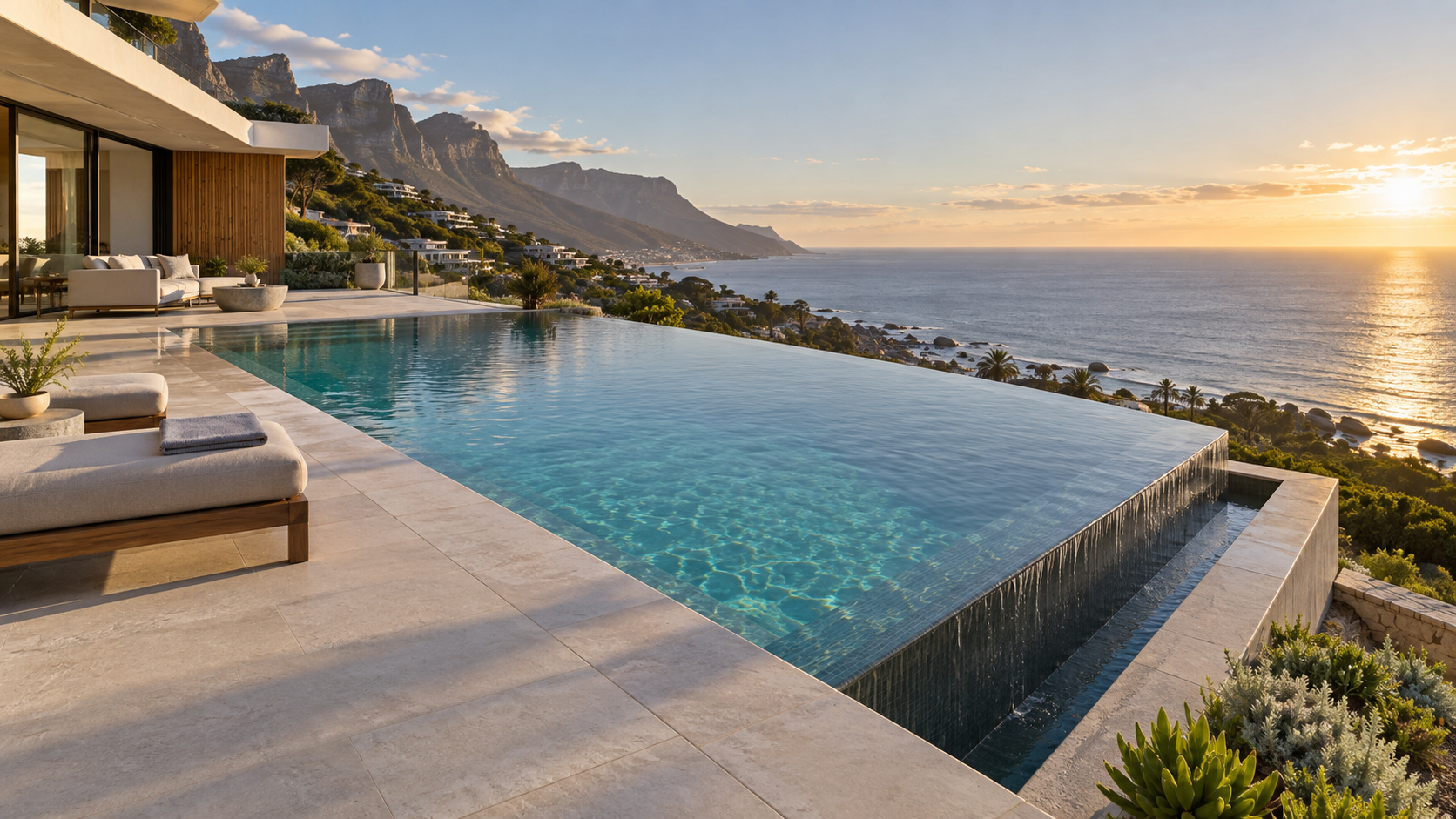
An infinity or rim-flow pool is defined by more than its visible waterline. The pool structure, levels, overflow route, circulation system, waterproofing and surrounding finishes must all work together to create the intended effect.
Cape Pools builds custom infinity and rim-flow pools for properties across Cape Town and selected surrounding areas. Each pool is planned around the available space, architecture, views and way the outdoor area will be used.
Whether you want a vanishing edge aligned with an ocean or mountain view or a rim-flow pool that sits almost level with the surrounding deck, the design must work technically as well as visually.
Planning an infinity or rim-flow pool in Cape Town or a surrounding area? Complete the form and Cape Pools will contact you to discuss the property, preferred design and next step.
Infinity pools and rim-flow pools both allow water to pass over the edge of the swimming area, but they create different visual effects and place different demands on the property.
An infinity pool usually allows water to flow over one or more selected edges into a collection area below. When the edge is positioned carefully, the water can appear to merge with the ocean, sky, garden or distant landscape.
This design is especially effective on elevated or sloping properties, but the presence of a slope does not automatically determine where the edge should go. The most important viewpoints may be from inside the house, an entertainment area, the pool itself or another part of the garden.
The length and position of the overflow edge affect the structure, water movement, collection capacity and final appearance. A single vanishing edge may provide a stronger result than extending the overflow around several sides without a clear visual reason.
A rim-flow pool brings the waterline close to the surrounding coping, paving or decking. Water passes over part or all of the perimeter and is collected through a channel before returning through the circulation system.
The result is a level, reflective surface that can complement contemporary homes, courtyards and entertainment areas. Unlike a view-led infinity edge, a rim-flow system can work on relatively level properties where the objective is to create a clean transition between the water and surrounding finishes.
Channels may be expressed as a visible design feature or integrated more discreetly into the edge treatment. The right approach depends on the selected finish, expected water movement, drainage requirements and how people will move around the pool.
The decision should consider more than appearance. The property’s levels, available space, prevailing wind, intended viewpoints, usable deck area and maintenance requirements all influence which system will work more comfortably.
Some properties suit a selected infinity edge facing the primary view. Others benefit from a rim-flow treatment that relates to the architecture on several sides. A combined design may also be possible where different edges need to perform different visual or practical functions.
Cape Town properties range from steep Atlantic Seaboard sites and compact City Bowl plots to established Southern Suburbs gardens and more open properties in the Northern Suburbs. These differences affect how an overflow pool should be positioned, built and connected to the surrounding area.
The overflow edge should be planned around the views people will experience most often. A design that looks impressive from one position may appear poorly aligned from the house, terrace or main entertainment space.
Existing ground levels also determine how much supporting structure, excavation or retaining work may be required. On a steep site, the exposed side of the pool may form part of a substantial engineered structure. On a more level property, the work may focus on achieving a precise relationship between the waterline, channel and surrounding surface.
The pool’s finished level must also work with doors, patios, garden drainage and nearby structures. Treating the pool as an isolated element can create awkward steps, unusable spaces or drainage problems around the completed outdoor area.
The shell must support the pool, water load and overflow arrangement under the conditions present on the property. Soil, rock, fill, nearby foundations and retaining structures can all influence the construction approach.
Elevated pools and pools positioned close to buildings or boundaries may require additional structural input. Any necessary engineering, building-plan or specialist requirements should be resolved before the affected work proceeds.
Construction access matters as well. Excavation, spoil removal, concrete work, materials and equipment are easier to manage on an open property than on a steep or enclosed site with narrow side access. Access limitations do not always prevent the project, but they can affect the method, programme and cost.
Water passing over the edge must be collected and returned at a suitable rate. The system needs enough balancing capacity for normal displacement, water movement and the selected overflow length.
Pipe routes, pump selection, filtration, level control and equipment positioning should be considered together. An attractive edge will not perform properly if the circulation system cannot maintain consistent flow or if the collection components are difficult to access for servicing.
The edge itself also requires accuracy. Small variations can cause water to favour one section instead of travelling evenly along the intended overflow line. Structure, waterproofing and finishes must therefore support the same finished level.
Wind exposure is particularly relevant on coastal, elevated and open Cape Town properties. Strong wind can interrupt the appearance of the overflow, increase splash and move water onto surrounding surfaces.
The direction of the edge, drop height, channel design and surrounding drainage should account for these conditions. Water leaving the pool area must be directed away from buildings and other vulnerable parts of the property.
These considerations also affect evaporation and heating. A large exposed overflow surface may lose more water and heat than a sheltered conventional pool, making the relationship between appearance, comfort and operating requirements important from the beginning.
Planning an infinity or rim-flow pool in Cape Town or a surrounding area? Complete the form and Cape Pools will contact you to discuss the property, preferred design and next step.
Custom overflow-pool construction follows many of the same broad stages as a well-built concrete pool, with additional attention given to levels, edge accuracy, collection and circulation.
The project begins by establishing the pool position, dimensions, intended edge treatment and relationship with the house and landscape. This creates the basis for structural requirements, plumbing routes, equipment positioning and surrounding works.
Setting out and excavation are followed by the required structural construction. The overflow edge, channels and associated water-handling components must be incorporated accurately rather than treated as decorative additions after the shell has been built.
Plumbing and circulation components are coordinated with the pool structure so that essential routes remain accessible and do not conflict with retaining work, decks or buildings. Where professional engineering or architectural input is necessary, those requirements should be aligned with the construction scope.
Waterproofing and finishes follow after the underlying structure and levels have been checked. Tiles, coping, channels and surrounding surfaces all influence the final waterline and must be installed with the intended overflow in mind.
The completed circulation and overflow system is then tested and adjusted. Water should travel along the intended edge, enter the collection area correctly and return through the filtration system without creating avoidable noise, excessive splash or uneven flow.
For wider construction information, see Cape Pools’ swimming pool construction services and concrete and gunite pool services
An infinity or rim-flow pool should feel connected to the property rather than added as a separate feature. Its position affects what people see from inside the home, how the entertainment area functions and how easily swimmers can enter and move around the pool.
The overflow edge can align with a horizon, garden level or architectural line. Windows, doors, terraces and seating areas should therefore be considered when determining the pool’s position and finished height.
A view-led edge does not always need to face the widest possible landscape. A carefully framed section of ocean, mountain, garden or sky may create a stronger result and require a more practical structure.
The transition between the water and surrounding surface is especially important with rim-flow designs. Coping, tiles, paving or pool decking must accommodate the overflow channel, drainage and expected foot traffic without making the edge feel disconnected.
Material choices should also suit exposure to water, sun and pool chemicals. Colour and texture influence both the appearance of the water and the comfort and slip resistance of the surrounding area.
On properties where the pool forms part of a larger renovation, planning these finishes together can reduce awkward junctions between new and existing surfaces.
A custom infinity or rim-flow pool cannot be priced responsibly from the visible pool dimensions alone. The structure below and around the water often has as much influence on the project as the selected finish.
Important cost and programme factors include:
An accessible site with a simple selected edge will differ from an elevated pool requiring substantial support, restricted-access construction and extensive surrounding work.
Defining the layout, technical requirements and finishes before pricing produces a more meaningful project scope. It also makes it easier to separate essential construction from optional design additions.
Planning an infinity or rim-flow pool in Cape Town or a surrounding area? Complete the form and Cape Pools will contact you to discuss the property, preferred design and next step.
Infinity and rim-flow pools require the same core water care as other swimming pools, including filtration, cleaning and balanced water. Their overflow components introduce additional areas that need routine attention.
Leaves and wind-blown debris can collect in channels and lower collection areas. Keeping these components clear helps water move freely and reduces unnecessary strain on the system.
Water levels and automatic controls should remain correctly set. A level that is too low may interrupt the overflow effect, while incorrect operation can waste water or prevent the system from performing as intended.
Pumps, filters, controls and collection components should also remain accessible for servicing. Hiding equipment completely may improve the immediate appearance but can make routine maintenance and future repairs unnecessarily difficult.
Edge length, drop height and water flow influence operating sound. Some homeowners enjoy the sound of moving water, while others want a quieter outdoor area. This should be considered when determining how the overflow is expressed.
Wind exposure, evaporation and heat loss may also affect water use and operating costs. A design that accounts for the property’s conditions will generally be easier to manage than one selected only from an inspiration image.
Cape Pools provides custom infinity and rim-flow pool construction across the Cape Town metro and considers suitable projects in selected surrounding Western Cape locations.
Within Cape Town, coverage includes the Atlantic Seaboard, City Bowl, Southern Suburbs and Northern Suburbs. View-led and elevated properties in Camps Bay, Clifton, Bantry Bay and Hout Bay can suit selected infinity-edge designs, depending on their levels and orientation.
Cape Pools also serves established residential areas such as Constantia and Bishopscourt, where the pool may need to integrate with an existing home, mature garden or wider outdoor renovation.
Beyond the central metro, suitable projects may be undertaken in the Helderberg and Cape Winelands, including Somerset West and Stellenbosch. Selected West Coast projects, including Langebaan, can also be considered where the scope and location are practical.
A dramatic slope is not required for every overflow pool. Rim-flow designs can also work on level suburban properties where the objective is a raised waterline, a reflective surface or a close relationship between the pool and surrounding entertainment area.
Planning an infinity or rim-flow pool in Cape Town or a surrounding area? Complete the form and Cape Pools will contact you to discuss the property, preferred design and next step.
WhatsApp us